Learn about Moringa Powder Supplement quality and dosage!
Learn important information about taking moringa for your health and energy, including how to choose the most potent Moringa product and the right dosage for optimal health benefits.


Originally published by Cathryn Freer on my website at https://www.conquercancerandhealthchallengesusingherbs.com/
Learn important information about taking moringa for your health and energy, including how to choose the most potent Moringa product and the right dosage for optimal health benefits.
- How much Moringa should I take daily?
- Should I stop taking my multivitamin?
- What steps are involved in processing Moringa, and why do these steps matter?
- How can I tell the quality of the product?
- The graphs showing Moringa’s nutritional qualities in grams confuse me.
- Is the amount of most Moringa products basically the same?
- (We grew Moringa trees in both California and in TN) We had a business for several years selling the trees and Moringa products. I did a lot of research on Moringa in those years.)
The problem is that there is no simple, cookie-cutter answer. In many projects in countries such as Africa, people are often starving. Mothers are dying. Their babies are dying because of the lack of food in those areas. Mass starvation with babies who are barely hanging on to life is not America. We do not see bodies on our streets because of starvation. In those situations, Moringa is an easy-to-grow tree for families in countries where it is widely grown.
It is a large tree with many edible leaves. It grows leaves quickly after you pick them. It is a food source that is easy and cheap to grow and use. People just pick the leaves from trees in their yard or in the community.
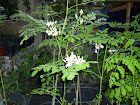
This article answers questions about the quality of Moringa Powder supplements.
Buying quality Moringa leaf powder means knowing how it was processed.
With trees growing in every area, education teaches people that Moringa leaves are edible and nutritious. We have over 50 different trees that grow in TN, but most of them do not have edible leaves. A few do, but how would I know that unless someone told me or I read it? We have May Apples here that grow wild. Most locals do not know that the May Apples can be eaten, even though the plant is not. Only the local herbalists seem to know which plants growing here are edible. So it is also true that people living near Moringa trees often don't realize you can eat the leaves, pods, and flowers.
Below are commonly asked questions about Moringa Supplement Quality and Dosage:
Moringa does not grow year-round in most of the United States
In the United States, it only grows year-round in places like Southern California, Florida, or Hawaii. In Hawaii, for instance, you can buy fresh leaves in the market to use in teas and dishes. It is like buying lettuce here for your salads. It is eaten as a standard in everyday salads. In other climates, it is a seasonal tree that dies off in winter. Water and land are more expensive here, so growing it costs more. Rules and regulations are extensive, and they apply to Moringa leaves once they're removed from the trees. So it is not available in your local market in most areas of the U.S. Asian markets in the states listed above do often carry the fresh leaf in their produce department or at the local farmer’s markets. So most Americans have access to Moringa products only by buying it in bulk powder, capsules, tea, or extract form.
Most families in the U.S. eat a diet filled with many different foods, some of them junk food and highly processed, but their stomachs are not swollen from starvation but from obesity. Neither is good for longevity. Still, our children do not die daily from massive starvation as in parts of Africa suffering from drought and war.
For most Americans in the United States, except Hawaii and Florida, moringa is a supplement, not a main food source.
A supplement is food that isn't a main food item but is taken in addition to your normal diet. In the Philippines, people eat moringa fresh off the branch. People eat it every day in various dishes. It is like we eat spinach or romaine lettuce here in the U.S.
Here we take it in a capsule, in a tea, or add the powder to juice or a smoothie, so it is considered a supplement.
Supplements have a few hundred pages of more intense regulations than food. They are under different rules altogether, including labeling and other factors.
Americans, for the most part, buy Moringa, a superfood, as a dietary supplement.
How much you need as a fit, healthy person is very different for someone who has marginal nutrition or is starving. In those countries, they eat fresh leaves or dried Moringa powder in a gruel.
They consume a lot of Moringa because they have few high-quality food sources rich in protein, calcium, iron, Vitamin A, and other nutrients. If it is your ONLY food source for protein and other vital nutrients, you eat a large portion.
How healthy your diet is determines your need for Moringa and other supplements.
If you are a picky child who doesn’t like to eat vegetables, you would get more than a child who loves veggies, like my granddaughter who is three.
If I were a person who was unhealthy, had a lot of health issues, was not eating well, was elderly, and had no appetite, I would need more.
Each person has a different health situation and a different need for a Moringa supplement or any superfood supplement.
There can be NO cookie-cutter answer; each person has individual needs for different nutrients.
Should I still take a multivitamin?
Many junk multivitamins are on the market. They come in tablet form, which is hard to break down in the digestive system, and often contain synthetic vitamins, fillers, flow agents, and low-quality ingredients. You need to read the label carefully. They will say it is high in B-complex when it contains less than 10 mg of B vitamins. If you are taking a good-quality multivitamin, I would keep it unless you are going to consume several tablespoons of Moringa Oleifera.
Or you can discontinue the multivitamin and see how you feel and how your energy is after about two weeks. You could cut down on how much of the multi you take and see how you feel when you replace it with Moringa.
The problem is that some people notice a difference with one capful of Moringa or one tsp, while others need 6 caps or 3 tsp to feel a difference in their energy and well-being. You must listen to your body! Start with 1/2 tsp, then work up to more.
How much Moringa powder supplement should I take? The research shows grams in their graphs! How accurate is the product label?
Now there are a hundred or so different companies selling Moringa products. Most of them show the product in either grams or ounces. A few break down their serving information into teaspoons or tablespoons. They actually state how much protein is in a tablespoon of their product. Most don’t because they don’t want to get pinned down and accused of false-label information.
What you must understand is that the label statement is just a general statement for their product. The actual amount of protein per tablespoon will vary, as will the other nutrients listed on the label.
Most research on Moringa is reported in grams. That research was done on samples from different areas. Those quoted nutrients apply only to that sample. They are general guidelines for the nutritional value of Moringa. Each shipment, or each pound within it, can differ in nutrient content.
Even though you can take more, as stated on WebMD below, most people start with 1 tsp and work up from there. Remember, if you are healthy, you need less as a supplement. If you are nutritionally deficient, take more. Work up the amount of Moringa you take daily, slowly. Start slowly because you may have allergies to the product, or it may affect your bowel and gut flora.
“Consuming moringa powder is proven to be safe, even at higher levels. Daily dosage should be limited to the equivalent of 70 grams of moringa leaves per day or 11 teaspoons of moringa powder.” https://www.webmd.com/diet/health-benefits-moringa-powder#:~:text=with%20human%20studies.-,Amounts%20and%20Dosage,11%20teaspoons%20of%20moringa%20powder.
Factors that affect the quality of Moringa powder supplements:
Climate of the area where the trees are grown.
Soil quality and the fertilizer used.
Water purity: Water is unfit for watering or for health. Plants absorb chemicals and heavy metals, which contaminate the products. India is one example, but China and Mexico are bad as well.
Climate pollution: India and China are among several countries with horrible air pollution from industrial waste.
Steps for picking, washing, and drying the products.
How and by what method was the product dried?
What chemicals were used, if any, in the different processing steps?
How and under what conditions was the Moringa packaged?
How long did the products sit in the warehouse? How hot was it? How clean was it? Were there mice and rats in the area?
How clean was the equipment?
Was there contamination in the equipment?
Was the storage facility contaminated?
Quality equals nutritional value for any given bottle or bag of product.
Grams…Ounces... teaspoons... it is so confusing!
Generally, 16 ounces of Moringa Powder contain 453 grams. One ounce contains generally around 28.3 grams. One dry ounce equals generally around 9 tsp or 3 tablespoons. So, 100 grams (3.5 ounces) of Moringa powder equals about 10 tablespoons.
When they say 100 grams of Moringa contains this much of each ingredient, they mean roughly 10 tablespoons. That is how much you would have to consume to get the nutrient amounts they are stating. That still doesn’t tell you exactly how that compares to the same number of carrots, or other normal foods you eat. It gets pretty complicated to do that.
Determining the nutrition of the vegetables and fruit you buy is the same problem in Moringa supplements
The problem is that vegetables in general vary in the nutrients they contain for the same reasons Moringa does. Not all veggies are equal in nutritional value. How long did yours sit in the refrigerator before you cooked them? How long were they at the supermarket? How long did they sit in the warehouse before being shipped to the market? How many days did they sit at the processing plant? Few foods go from the field to the farmer’s market. Most of them involve several steps that reduce their nutritional value. I remember when we lived in Imperial Valley, CA. The huge trucks of picked carrots would sit in the fields for a day or two in the heat before being taken elsewhere.
Generally, 1 tablespoon of the Moringa Powder supplement contains 24 calories, 3.24 grams of protein, 3.6 grams of carbohydrates, 240 mg of Calcium, 44 mg of Magnesium, 159 mg of potassium, 2 mg of Vitamin A, 50 mg of choline, 0.3 mg of Thiamine or B1, 2.5 mg of Riboflavin or B2, 1 mg of Nicotinic Acid or B3, 500 mg of Vitamin C, 23.5 mg of Vitamin E, 35 mg of Potassium, and 3.4 mg of Iron.
If the growing environment is exceptional, these nutrients can be higher. But the processing could still ruin its nutritional value.
Many micronutrients can't be measured.
Chlorophyll, which is why leaves are green, has many great health benefits.
Moringa contains many anti-inflammatory compounds, antioxidants, and minerals that have only positive effects on the body.
Many of Moringa's benefits can't be easily tracked per pound of product. They are part of Moringa as a whole food. It takes hundreds of dollars to analyze products for micronutrients. The testing period is costly.
Buy Organic Moringa products tested in this country for heavy metals, contamination, E. coli, and other factors that degrade the nutritional quality of your Moringa powder.
So I hope this article helps you to decide how much Moringa you should take for your diet and lifestyle.
Cathryn Freer, the Herbladyisin