The Potency and Safety of an Herb Depend on 7 Critical Factors.
Learn the 7 critical factors between a trusted safe herbal product and one that could contain heavy metals, lead, and other contamination.


“Originally published in Conquer Cancer and Health Challenges with Herbs ” by Cathryn Freer, the Herbladyisin
Support my work and website. Support me as I strive to provide you with articles and research that offer the truth about healing with herbs and alternative medicine. Support my website by clicking on the link here!
You go to the store, scan the herb shelves, and there is a huge selection of herbs to choose from. You have a vague idea of what you want beforehand. The woman in charge of that section is not legally allowed to tell you what to buy or what health problems it is used for. There are a number of different brands to choose from, so does it make a difference? The steps in an herb's life, from growing to packaging, make all the difference in its potency and safety.
How and where was the herb grown?
The herb needs to be grown in good, contaminant-free soil. If possible, organic-certified. China and India are where many herbs originate. The water, soil, and air in these countries are polluted. Lead is a real problem in these countries. Lead can also occur in herbs grown in areas where volcanoes once erupted. It is naturally occurring lead, not lead from industrial pollution, as in India and China.
The Ganges River in India, which waters the agricultural crops, is one of the most contaminated rivers in the world, with dead animals, dead human carcasses, industrial pollution, chemicals of every kind, and disease. That river feeds all the agriculture throughout the nation. Plants take up chemicals, and you ingest them.
What species of plant was picked?
In many plant species, only one or two are medicinally potent and used in herbal medicine. If you pick the wrong one, you won't get any medicinal value. Herbs have look-alikes, so you must know if the right herb is picked and what part was picked.
There are problems with cheaper herbs being substituted for the correct botanical species in the formulation. This is especially true of herbs such as goldenseal, which are mixed with less expensive herbs. That is why testing of the plant material is critical.
Herbs need to be picked at a specific time of day, after they have reached maturity.
Was the correct part of the plant processed?
In some cases, only the root is potent. In other herbs, it is the flowers or the whole plant that are used for healing.
What drying process was used to dry the herbal product?
How long was the herb sitting there before processing?
Was it air-dried, and under what circumstances?
Was it stored in a clean processing plant?
Was the machinery clean? Were the people in charge using clean procedures?
If the herb was not processed properly through all these steps, you have a useless product.
You cannot tell by looking at the contents of a cap? Taste may be different. Color may vary in a product. Smell may be an indicator, but not always.
Was the original herb product tested in the US by a 3rd party testing company?
If a company doesn't talk about its testing procedures, it probably doesn’t test. They import the material and use the test scores from the country of origin. That is not good.
Was the plant material tested before it was bottled or packaged? Why is testing so important?
These are the tests that should be performed on products before bottling.
Below is an example from Raintree Pharmacy in Florida. They state this on their website.
“Testing
We ensure we use current industry-standard testing methods. All tests are conducted at FDA-registered facilities that are ISO/IEC 17025:2017-certified and comply with cGMPs.
Botanical Identification
- Botanical Vouchers from expert botanists
- FTIR (Fourier Transform Infrared Spectroscopy)
Microbiologic Testing
- Total Aerobic Plate Count USP <61>
- Yeast & Mold USP <61>
- Coliforms AOAC 991.14
- Escherichia Coli USP <62>
- Salmonella USP <62>Staphylococcus aureus USP <62>
- Pseudomonas aeruginosa USP <62>
Chemical Analysis
- Random Heavy Metals Testing
- Arsenic
- Cadmium
- Lead
- Mercury
Storage
- Temperature/Humidity-controlled warehouse
- Facility inspected by FDA
- Facility inspected by the Florida Department of Agriculture.”
How was the herb material bottled or packaged?
Was it bottled or packaged in the country of origin, like India? Is the facility modern and clean, and does it have no access points for mice or rats? How long does the product sit in the warehouse before it's shipped or sold?
Don’t buy products that don't state the testing they perform on the bottle label.
All these steps, from picking to bottling, are extremely important and make the difference between an herb that is potent and safe and one you might as well dump into the trash.
It’s one of the main reasons people say herbs don’t work: they bought a cheap, untested product.
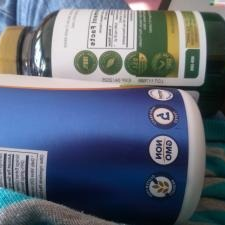
Buy products that show seals on the bottle label, like 3rd-party tested, organic certified, GMP, and tested in the US.